3 h2,555 reviews
3 hFrom Vik: Katla Ice Cave and Super Jeep Tour
★ 4.6 · 2,555 reviews
- Three hours, to the Katla Ice Cave
- Blue ice and volcanic ash
- Most booked
- Free cancellation
$192$64.00 / hour
Check availability→ The cave
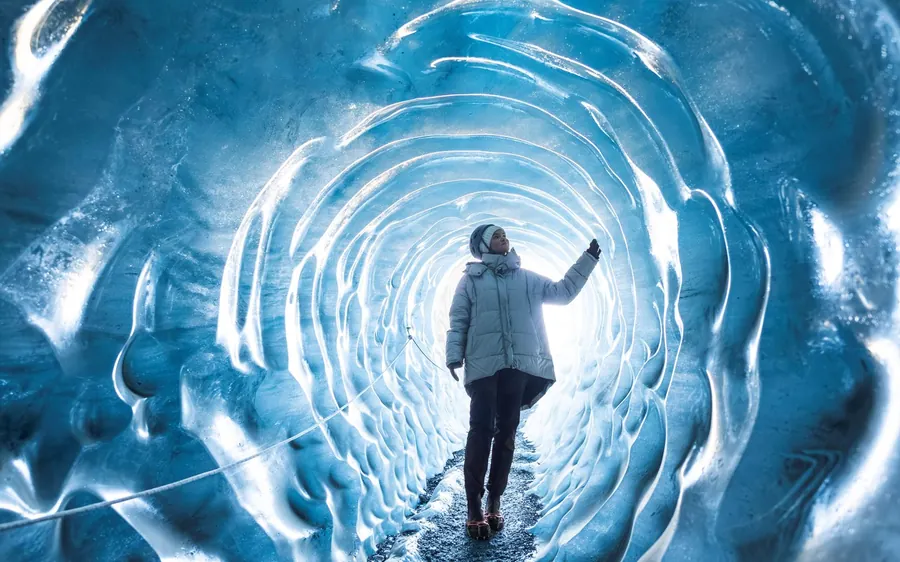
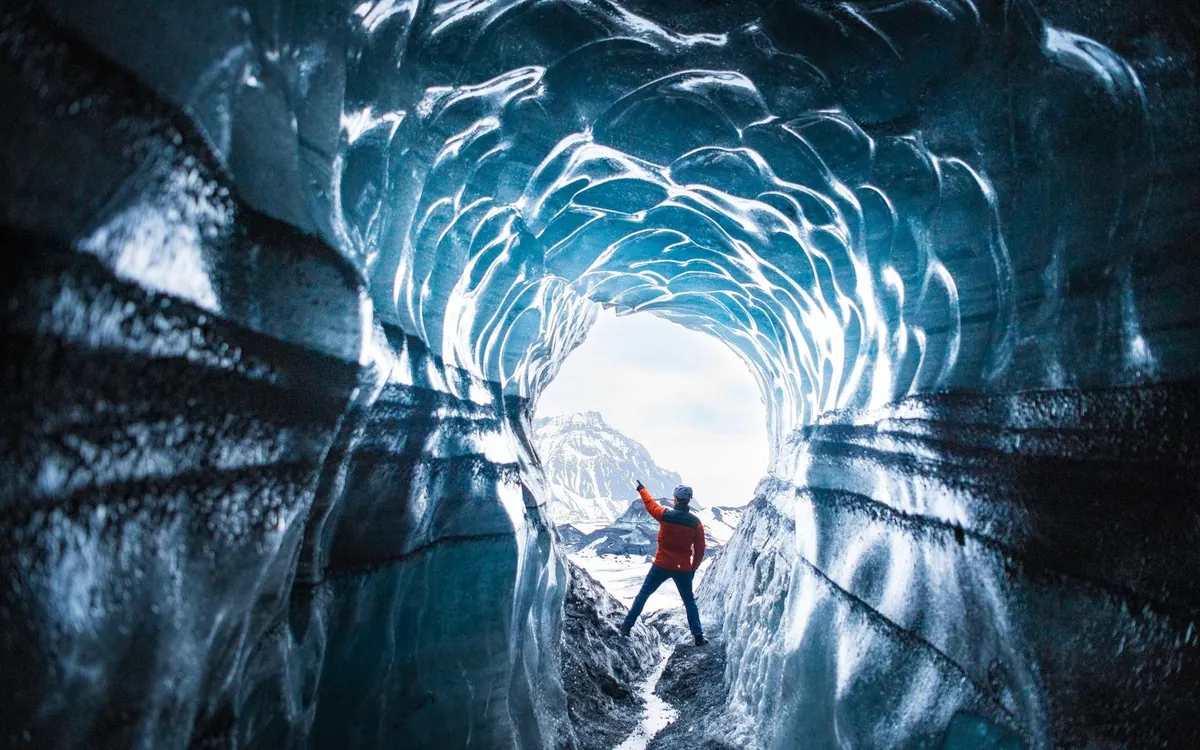
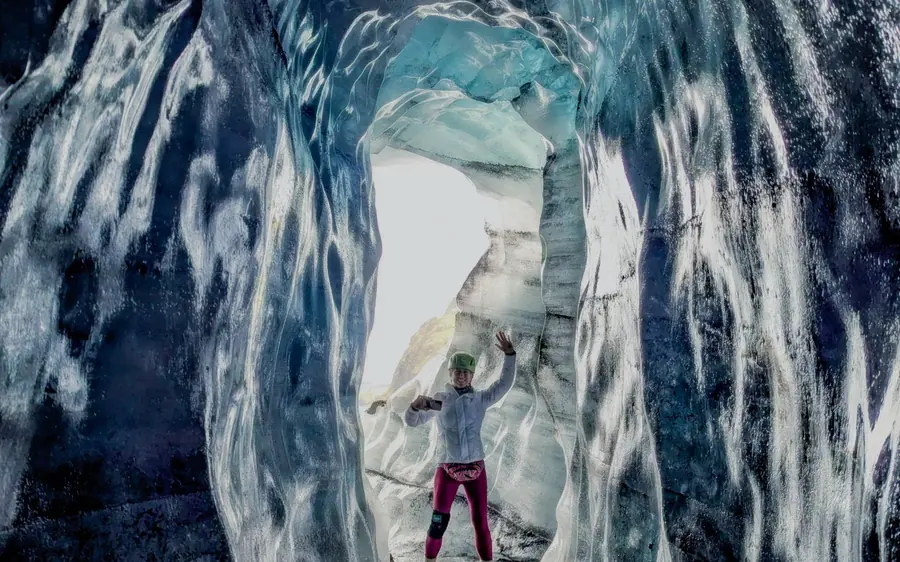
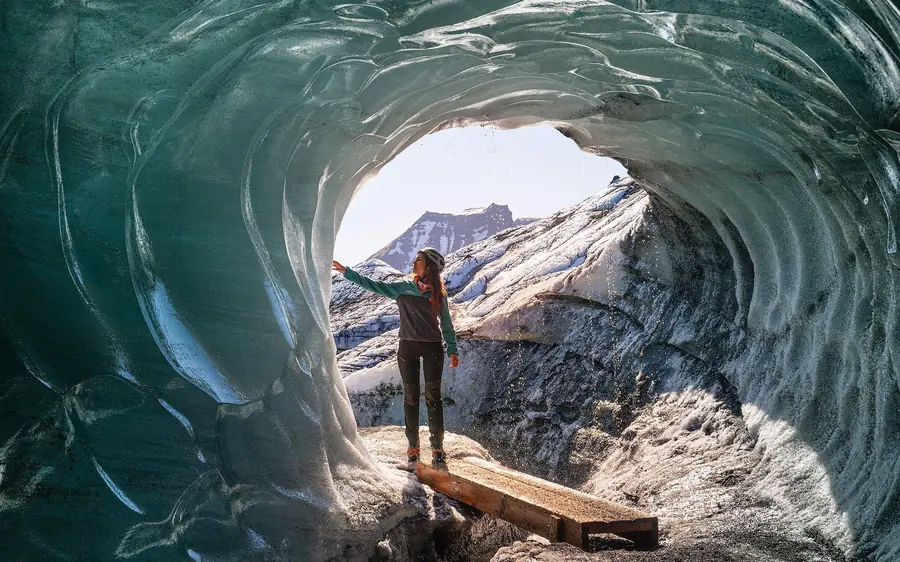
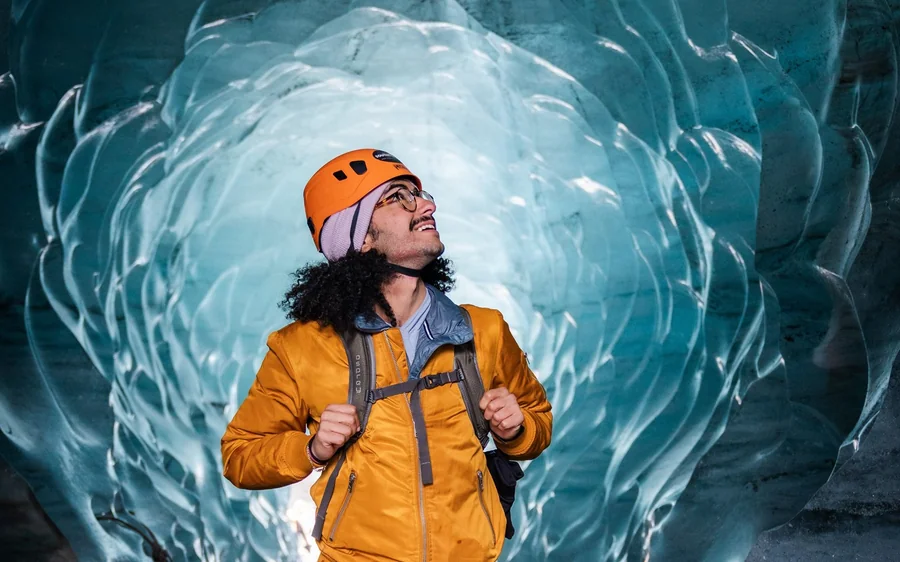
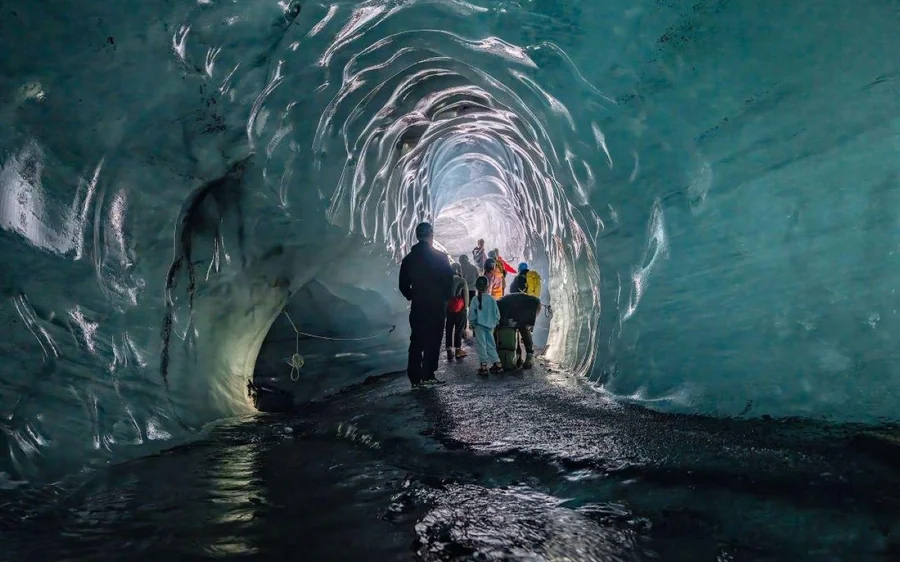
A Katla cave tour goes into the ice of Mýrdalsjökull, the glacier above the village of Vík, and what makes it worth a page of its own is the ice itself. The Katla volcano lies under that glacier, the glacier has flowed over volcanic ground for a long time, and it has carried the ash of that ground along with it. So the walls inside are banded: pale ice, dark ash, pale ice again, like the pages of a book turned on their side. This is also the one cave in the country guides go into in every month, while the natural blue hollows two to three hours further east exist only in the cold half of the year. Eleven of the sixteen listings on this site go in, from $181 to $2,459.
Quick answer
The short answer. A Katla cave tour is a guided visit into a hollow in a moving glacier, reached by super jeep across a plain of black sand, and it takes three hours from the village or ten to twelve from the capital. Book $181 for the shortest and cheapest way in, $192 for the version 2,555 people have already reviewed, or $285 — our top pick — if you are coming from the capital and want the coast as well. What no listing sells is a particular room: the ice reshapes itself through the year, and the chamber you stand in is the one the glacier has opened that month.
The basics
A glacier is a slow river, and this one runs over volcanic ground. Mýrdalsjökull sits above Vík as a cap of ice several hundred metres thick in places, and it moves. Underneath it is the Katla volcano, which is why the whole area is signposted as a volcano geopark and why $274 drives through that geopark on its way in. As the ice creeps downhill it scrapes up ash and grit and folds them into itself, and years of that produce the banding you photograph on a Katla cave tour.
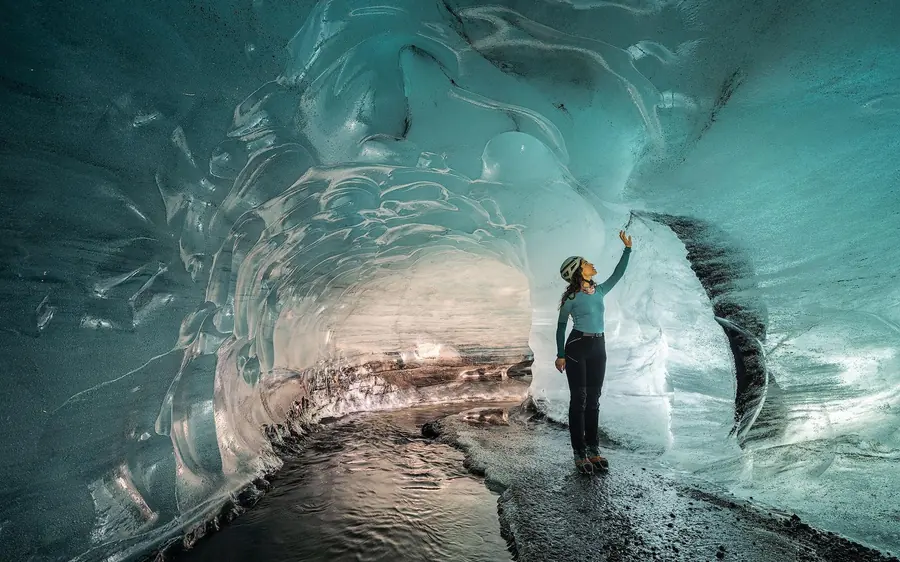
The hollows are made by water, not by digging. Meltwater runs under and through the ice, and where it has run it leaves a passage. Winter cold firms those passages up; summer melt reworks them. That is the reason a guide will not tell you in advance which chamber you are going into: the route is read off the glacier, and a passage that was wide in October can be a low crawl or closed altogether by spring.
Colour is a property of the light, not a promise. Where glacier ice is dense and clear of bubbles it absorbs the warm end of daylight and gives back blue. Where ash bands are thick the same wall reads grey or almost black. Both happen here, often within a few metres of each other, and the operators write naturally formed cave rather than describing a colour. Anyone booking a Katla cave tour expecting the saturated blue of a winter postcard is comparing this ice with a different ice cap.
Why this one is open in July. The famous blue caves of the south-east are winter features in Vatnajökull, two to three hours further east: they open as the cold sets in and the season closes them again. The ground above Vík behaves differently, and the guiding here carries on right through the summer. If you are travelling in the warm months and want to stand inside a glacier in this country, a Katla cave tour is the booking that exists.
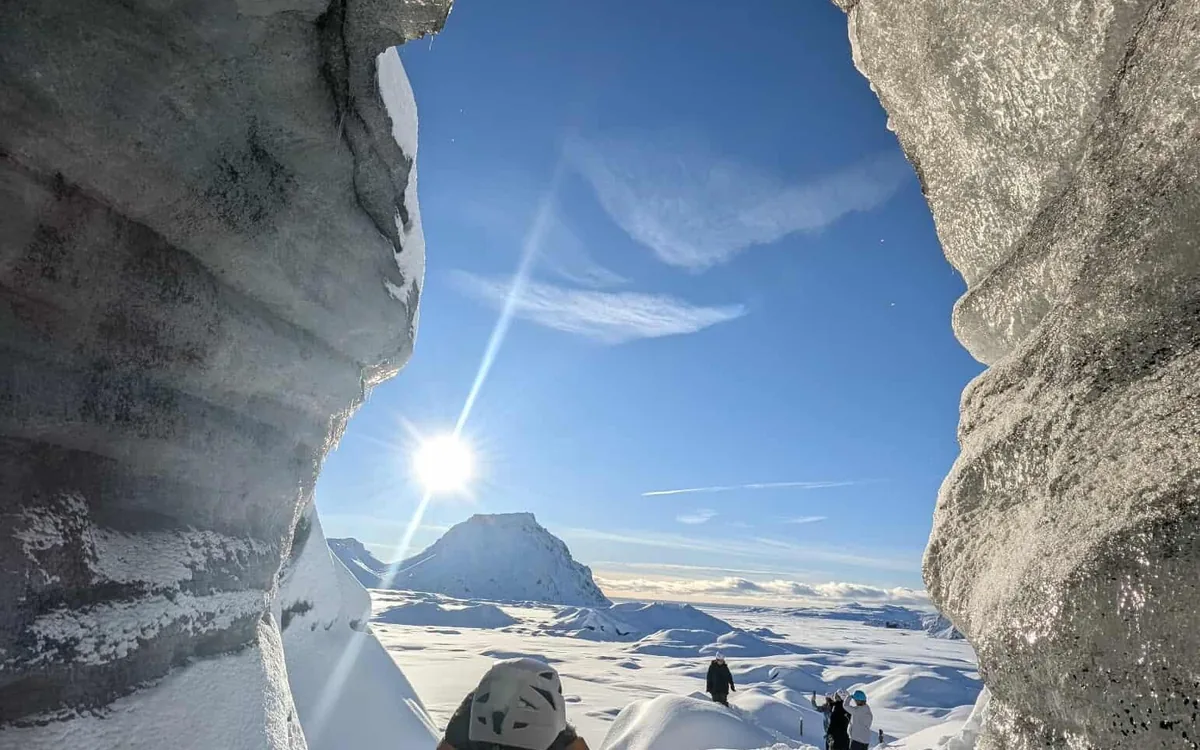
Getting in is a drive and then a walk. Every listing puts you in a high 4x4 for the black sand plain east of the village — $250 calls it a journey through black sand dunes — and then you go the last stretch on foot in crampons. The walk is short. The surface is not smooth, and that is what the crampons and the guide’s route-finding are for.
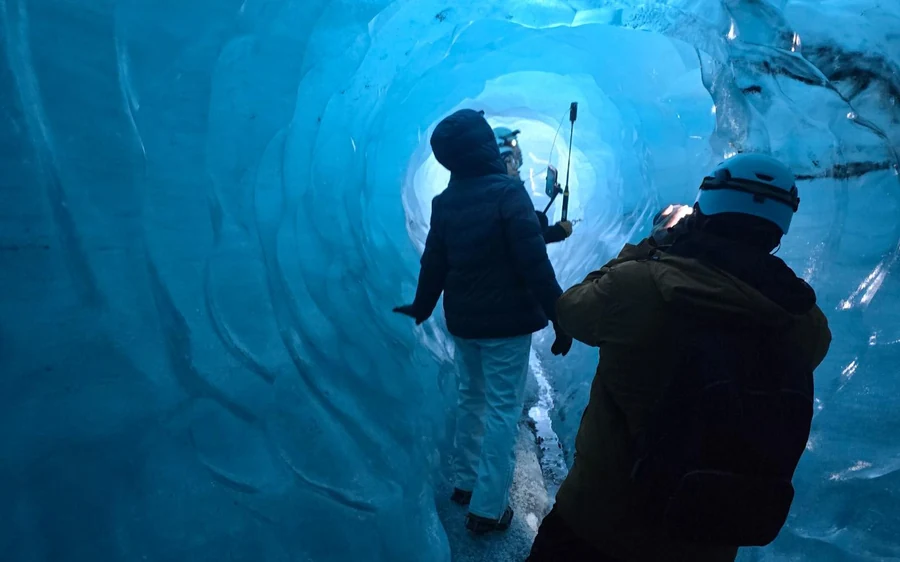
What the hour inside is like. Cold, quiet and much darker than the photographs suggest, because a camera gathers light that your eye does not. Helmets stay on. The guide points out where the ash bands sit and what the shape of the ceiling says about the water that made it. An hour is enough to see a glacier from the inside and to understand why this ice is striped instead of clear.
Every trip, current fare
Eleven of the sixteen listings on this site name this cave: five half days from the village, four full days from the capital and two private cars. Cost per hour divides the fare by the length printed on the listing. The two- and three-day trips are divided by the full forty-eight and seventy-two hours they book out, so their figures sit below everything else and do not compare with a three-hour visit.
| Tour | Length | Price | What is included | Cost per hour | Rating |
|---|---|---|---|---|---|
| From Vik: Katla Ice Cave and Super Jeep Tour2,555 reviews — the most here | 3 h | $192 | A super jeep off-road to the cave, ash in the ice, small group and transport from Vík | $64.00 | 4.6 · 2,555 |
| From Vik: Katla Ice Cave Small-Group TourOur fare from — pickup in Vík | 3 h | $181 | Pickup and drop-off in Vík, then a super jeep into the highlands to the natural cave at Katla | $60.33 | 4.4 · 1,279 |
| From Vik: Katla Ice Cave & Super Jeep TourThrough the Katla Volcano Geopark | 3 h | $274 | A super jeep through the Katla Volcano Geopark to the cave in Mýrdalsjökull, coffee and biscuits after | $91.33 | 4.7 · 1,513 |
| From Vík: Katla FastTrack Ice Cave TourRated 4.8, a young listing | 3 h | $250 | A drive through black sand dunes to the cave, a guided visit inside, then back to Vík | $83.33 | 4.8 · 27 |
| Katla Ice Cave Extended Guided Tour with Super JeepFour hours, canyons and waterfalls | 4 h | $298 | An extended guided visit under the volcano: glacier canyons, hidden waterfalls and time for photographs | $74.50 | 4.8 · 7 |
| Reykjavik: Katla Ice Cave & South Coast TourOur top pick — 1,347 reviews | 12 h | $285 | The cave plus the South Coast from Reykjavík — waterfalls, black volcanic ash and ice | $23.75 | 4.7 · 1,347 |
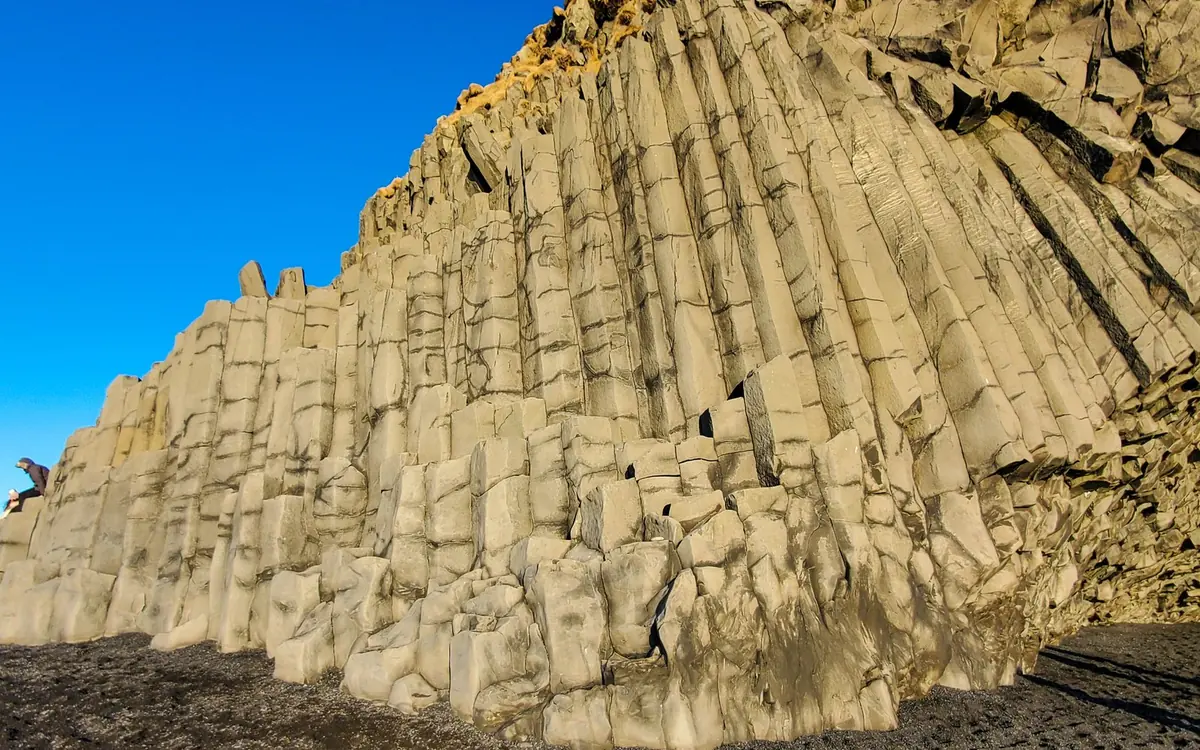
| Reykjavik: South Coast and Katla Ice Cave Small Group TourTen hours, small group | 10 h | $274 | A guided full day from Reykjavik or Vík: waterfalls, the black sand beach and the cave | $27.40 | 4.7 · 771 |
| From Reykjavik: Katla Ice Cave and South Coast Day TourRated 4.9 from 214 reviews | 12 h | $291 | A small-group minibus from Reykjavík, the South Coast sights and a super jeep up to the cave | $24.25 | 4.9 · 214 |
| From Reykjavík: Katla Ice Cave and South Coast TourEleven hours, two waterfalls | 11 h | $293 | The cave, a super jeep up the glacier, and the Skógafoss and Seljalandsfoss waterfalls | $26.64 | 4.7 · 220 |
| Reykjavik: Private South Coast and Katla Ice Cave TourPrivate, a new listing this season | 10.5 h | $875 | A private day from Reykjavik: Seljalandsfoss, the black sand beach, Vík village and the cave | $83.33 | New |
| From Reykjavik: Private South Coast and Katla Ice CavePrivate, the highest fare here | 11 h | $2,459 | A private run down the South Coast as far as Vík, with the waterfalls and the sights on the way | $223.55 | 5.0 · 2 |
Not the same ice
Three different things get photographed under the same two words. A Katla cave tour is the first row, and only the first row runs all year.
| What it is | Which glacier | When | What the walls look like |
|---|---|---|---|
| The cave above Víkwhat this site books | Mýrdalsjökull, with the Katla volcano beneath it | All year, guided in the warm months as well | Banded: pale ice and dark volcanic ash, blue where the ice is dense |
| The natural blue caves of the south-easttwo to three hours further east | Vatnajökull, reached from the glacier lagoon | The cold half of the year only | Mostly clear, dense ice; the blue of the winter photographs |
| A glacier walkon top of the ice rather than in it | Several outlet glaciers, including the ones near the village | All year, weather permitting | Ridged surface ice, crevasses, ash layers underfoot |
The verdict
If the cave is the whole point: $181 or $192. Three hours from the village, no scenery quota to fill on the way, and the shortest route from a bed to the inside of a glacier anywhere on this coast. The first is the lowest fare on the site with 1,279 reviews at 4.4; the second holds 2,555 reviews at 4.6, the largest body of opinion here.
If you want longer in the ice and the canyons: $298. Four hours, and the description commits to glacier canyons, hidden waterfalls and time for photographs. It is rated 4.8 from 7 reviews, so young. For a photographer this is the listing whose shape fits the job, because nobody is moving you on at the ten-minute mark.
If you are coming from the capital: $285. Our top pick. Twelve hours, 4.7 from 1,347 reviews, and the cave sits at the end of a South Coast day. $291 is the highest rated of those days at 4.9 from 214, and $274 is the shortest at ten hours.
If you want the geopark drive as well: $274. 4.7 from 1,513 reviews, the route runs through the Katla Volcano Geopark, and there are hot drinks at the end. Of the three established village listings this is the highest rated.
If it is your own group: $875 or $2,459. A private car and a driver-guide for ten and a half or eleven hours. The second is the highest fare on this site. What you get for it is a day that waits for you, which on ice and in changing light is worth more than it sounds.
Book direct
Fares, lengths and ratings live off the listing pages. The fare from for the cave itself is $181.
★ 4.6 · 2,555 reviews
★ 4.4 · 1,279 reviews
★ 4.7 · 1,513 reviews
★ 4.8 · 27 reviews
★ 4.8 · 7 reviews
★ 4.7 · 1,347 reviews
★ 4.9 · 214 reviews
The variables
The ice is never twice the same. These three decide most of what you will actually see on a Katla cave tour.
The month you come
The cold months firm the passages up and the light outside is low and long. The warm months rework the shapes and give you a bright, easy drive. Both are bookable here, which is the unusual part; the ice is simply doing something different in each.
What the glacier has opened
This is not a choice you make. The guides work the route that is standing that week, and the listings describe a naturally formed cave for exactly that reason. It is the honest limit of what anyone can promise you.
How long you have inside
The three-hour listings give you about an hour in the ice. $298 stretches the day to four hours and spends the difference on canyons, waterfalls and photographs.
Straight answers
Is it a natural cave or a tunnel? Natural. It is a hollow that meltwater has left inside a moving glacier, which is why its shape changes and why the guides scout it. That also explains the honest wording on every listing: a naturally formed cave, not a named chamber.
Why is the ice dark in places? Volcanic ash. The glacier has been flowing over volcanic ground for a long time and it carries what it picks up, so the wall reads as bands. On a Katla cave tour this is the thing to look at rather than something to look past: each dark line is a layer of ash the ice folded in.
Will it be blue? In places, where the ice is dense enough. The colour depends on the ice and the light on the day, and no operator here sells one. If a saturated blue room is the whole reason for the trip, the caves that produce those photographs are in the ice cap further east and they are cold-season only.
How cold is it inside? Around freezing, steadily, whatever the weather outside is doing. That is why a summer visit needs the same layers as a winter one, and why the wind on the walk in usually matters more than the temperature in the cave.
Is it dark? Darker than the photographs. Long exposures and wide apertures do the work in those pictures. Near the entrance there is daylight; deeper in, what you get is what the guide and your own eyes give you.
Do I need to be fit? No more than steady. The walk from the vehicle is short, the surface is uneven, and the crampons do most of the work. The four-hour listing asks a little more of you than the three-hour ones.
Can I get there without booking? Not sensibly. The black sand track needs a high 4x4, the passages need someone who knows which are standing this week, and the helmet and crampons come with the guide. Every listing on this page includes all three.
Is a Katla cave tour worth it if I have seen a glacier before? Standing on ice and standing inside it are two different days. The banding is the argument here: you are looking at a cross-section of what the glacier has swallowed, and that is not visible from the surface.
Mistakes
All five come from mixing up two glaciers that are hours apart.
The saturated blue chambers are in the ice cap two to three hours east, in the cold months. The ice above Vík is banded with ash, and that banding is its own reason to go.
That is true of the natural caves further east and not of this one. The cave above Vík is guided all year, which is why a summer visitor has something to book.
Meltwater makes these passages and meltwater rewrites them. The entrance moves, the ceiling changes height, and the guides scout the route rather than repeating it.
The last stretch crosses loose black sand and water. Every listing includes the super jeep leg because that is the only way the crossing works.
It is around freezing inside whatever the forecast says. Warm layers, a waterproof shell and stiff boots; the helmet and the crampons come from the operator.
Checklist
None of these are surprises if you have read the listing page.
Above the village of Vík, with the Katla volcano underneath. That is a different glacier from the one behind the famous blue caves of the south-east.
A naturally formed cave in a moving glacier. What is standing this week is what you will see, and that is what the listings promise.
Black sand and meltwater between the road and the ice. The transfer is included on every listing that goes in.
Helmet and crampons theirs; warm layers, waterproof shell and stiff boots yours.
Shown across the listings gathered here, which matters on a coast where the weather writes the timetable.
Want the glacier rather than the cave — what Mýrdalsjökull is, and what sits under it? That has a page of its own.
The glacier explained→Common questions
A naturally formed hollow inside Mýrdalsjökull, the glacier above Vík, with the Katla volcano beneath it. Meltwater makes the passages, and the walls are banded with volcanic ash the ice has carried down.
Yes. This is the cave guides work in through the warm months as well as the cold, unlike the natural blue caves in the ice cap two to three hours further east.
From the village, $181 to $298. From the capital, $274 to $293, with private cars at $875 and $2,459.
About an hour on the three-hour listings, once the drive out and back is taken out. $298 runs four hours and adds canyons and photograph time.
In places, where it is dense enough to bend the light that way. Elsewhere the ash bands make it grey or nearly black. The listings promise a naturally formed cave rather than a colour.
The listings set their own minimum ages and conditions, so read that line on the page you are booking. The walking is short and the guide leads it, but a helmet and crampons on uneven ice are the reason the trips are guided at all.
Warm layers, a waterproof shell and boots stiff enough to hold a crampon strap. The helmet and the crampons are handed out at the meeting point.
Go deeper
Every way into the cave, compared.
From VíkThe half-day version, met in the village.
From ReykjavikThe twelve-hour day, hour by hour.
Super jeepWhy an ordinary car cannot get there.
Which is bestThe honest comparison of the sixteen listings.
Glacier toursWhat else the ice around Vík offers.
Reykjavik: Katla Ice Cave & South Coast Tour
★ 4.7 · 1,347 reviews · Free cancellation 24 h